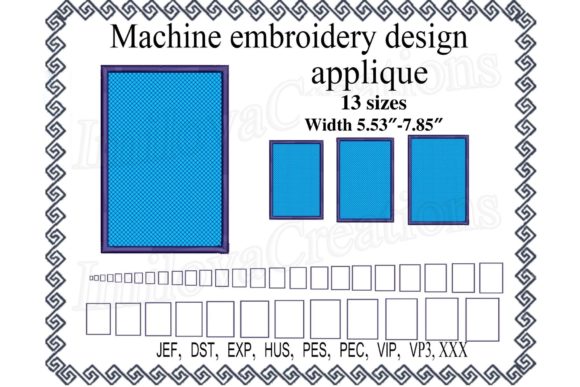
Rectangle Applique: A Craft Fair Embroidery Review
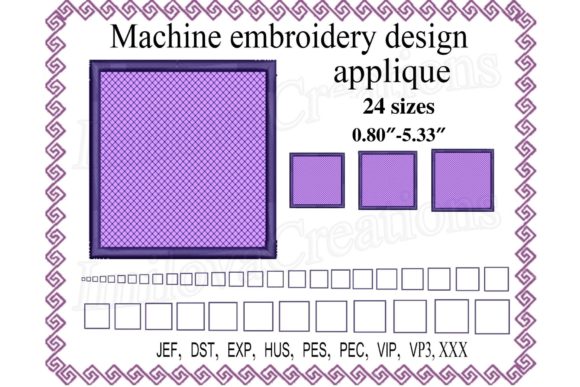
As an embroidery designer who has spent countless weekends behind a craft fair booth, I know that the difference between a table that draws customers in and one they walk past often comes down to the designs you choose to stitch. When I first looked at Rectangle Applique, I immediately started picturing it on a stack of tote bags, aprons, and tea towels ready for a busy Saturday market. This machine embroidery design carries a clean, modern, and slightly rustic feel that fits the aesthetic handmade shoppers love. It is not overly fussy, and that is exactly what makes it a strong candidate for a craft fair product lineup.
For anyone selling handmade goods or running a small shop, choosing the right embroidery file is a business decision as much as a creative one. Rectangle Applique has the kind of straightforward shape that reads well from a few feet away, which matters when a customer is scanning your booth from the aisle. It is versatile enough to work across multiple product categories, and it does not rely on tiny details that might get lost in production. Let me walk through how this design performs on actual craft fair products, what you need to watch out for, and how to turn it into a reliable seller.
First Impression: Clean, Bold, and Booth-Ready
My first impression of Rectangle Applique is that it lands somewhere between minimal and farmhouse modern, with a subtle decorative edge. It is not a loud, novelty design, nor is it overly delicate. It feels grounded and purposeful, which is a quality that translates well on products like kitchen towels, market bags, and pillow covers. The shape itself is familiar and easy to recognize, so customers do not have to stop and decode what they are looking at. That immediate readability is a huge advantage for a craft fair product.
Because it is an applique design, it also offers a tactile quality that embroidery alone sometimes lacks. The layered fabric adds depth and texture, and that catches the eye in a booth where everything else might be flat. I have found that applique designs tend to stop people who are browsing quickly, because the contrast between the base fabric and the applique fabric creates a visual break that feels handcrafted. Rectangle Applique takes advantage of that effect without being complicated.
Where Rectangle Applique Shines on Products
When I evaluate a design for a handmade product lineup, I think about which items will make it look its best and which will help it sell. Here is how Rectangle Applique performs across the typical craft fair booth inventory.
Tote Bags and Market Bags
Tote bags are a staple for any embroidery seller, and Rectangle Applique works beautifully as a center-front design. It is bold enough to stand out on a canvas tote without overwhelming the bag. I would stitch it in a medium size, roughly 4 to 5 inches wide, so it acts as a focal point. The clean lines of the rectangle mean it does not compete with the bag shape, and it looks especially good on natural or neutral fabric colors. If you use a contrasting applique fabric, it becomes a design that customers notice immediately.
Apron Embroidery
Aprons are another product category where this design fits naturally. Whether you are stitching for a farmhouse-style apron or a more modern canvas apron, Rectangle Applique adds a subtle decorative touch without being too cutesy. I would place it on the chest or at the bottom hem, depending on the apron style. It gives the apron a finished, professional look that justifies a higher price point at a craft fair.
Tea Towel Embroidery
Tea towels are a low-cost, high-volume item that many Etsy sellers and market vendors rely on. Rectangle Applique works well as a single accent near the hem or as a repeating pattern if you have the hoop space. Because tea towels are often made of linen or cotton with a visible weave, the applique adds a nice weight and texture. Just be careful with fabric texture on towels that have a loose weave, as the applique fabric needs to sit flat. I recommend testing on a scrap towel first.
Embroidered Patches
Patches are a fantastic way to sell digital embroidery file designs as finished products, and Rectangle Applique is a strong candidate for patch production. Its simple shape makes it easy to cut and finish, and it can be sewn onto bags, jackets, hats, or jeans. Patches are also great for a craft fair booth because they take up little space and have a high perceived value. I would offer a few color variations to give customers choice.
Fabric Pouches and Small Accessories
Small pouches, coin purses, and glasses cases are excellent for using Rectangle Applique as a small accent. Because the design is a rectangle, it adapts well to the limited space on small items. It does not require a lot of room to breathe, and it looks intentional rather than cramped. This is a good way to use up scrap fabric for the applique and create a coordinated set of products.
Pillow Covers and Home Decor
Pillow covers are a higher-ticket item that benefits from a design with presence. Rectangle Applique works well as a centered motif on a throw pillow, especially if you use a quality fabric for the applique layer. It adds a handmade, decorative feel that appeals to shoppers looking for unique home accents. I would pair it with a simple border or leave it as a standalone shape for a minimal look.
Practical Selling and Production Points
Beyond how it looks on products, I consider how easy a design is to produce in volume and how it presents in a booth. Rectangle Applique scores well on both fronts.
- Readability at a glance: The shape is simple and recognizable. Customers see it and understand it immediately. That reduces hesitation and helps move product.
- Size versatility: It works as a small accent (2–3 inches) on patches or pouches, and as a large focal design (5–6 inches) on totes or aprons. This flexibility means you can use the same embroidery file across multiple product lines.
- Photography for online listings: The clean lines and solid shape photograph well. Whether you are shooting for Etsy listings or social media, the design does not get lost in the photo. It looks crisp and professional.
- Batch production: Because it is an applique, the stitch count is generally lower than a full satin-stitch fill, which means you can produce more items in less time. That is a real advantage when you are preparing for a weekend craft fair and need to stock a table.
Careful-Use Notes for Production
No design is perfect for every situation, and Rectangle Applique has a few considerations that I want to flag before you stitch it on everything.
- Stitch density: Applique designs typically have a placement stitch, a tack-down stitch, and a satin border. If the border stitch density is too high, it can cause puckering on lightweight fabrics. Check the stitch density in your software before you start production.
- Fabric texture: On thick or textured towels, the applique fabric may not lay completely flat. Use a lighter weight fabric for the applique piece, and make sure your stabilizer is strong enough to handle the layers.
- Curved cap surfaces: If you plan to stitch this on caps, the rectangle shape is straightforward, but applique on a curved surface can be tricky. The fabric piece needs to be cut precisely and hooped with care. I recommend testing on a practice cap first.
- Dark fabric: On dark base fabrics, the contrast between the applique fabric and the background is crucial. Use a light or bright fabric for the applique piece, and check that the tack-down stitch is visible. A white or cream applique on a dark tote bag creates a striking look.
- Small sizes: If you shrink the design too much, the satin border may become too narrow and the applique piece may not be stable. I would not go smaller than 2 inches for this design, and even at that size, test it first.
Visual Appeal and Customer Engagement
In a craft fair booth, you have only a few seconds to catch a shopper's attention. Rectangle Applique works because it is not trying to do too much. It is a shape that feels familiar, and that comfort draws people in. Once they stop, they notice the texture of the applique fabric, the contrast of the thread, and the handmade quality. That combination of immediate recognition and tactile detail is what turns a browser into a buyer.
I have found that designs like this one also work well for brand consistency. If you offer multiple products with the same Rectangle Applique design in different colors, your booth looks cohesive. That visual unity makes your table look professional and intentional, which builds trust with customers. You can also pair it with other simple shapes or monograms to create a collection.
Practical Embroidery Designer Notes
Before you stitch Rectangle Applique for a craft fair or handmade product line, let me share a few production notes I have learned from experience.
- Test on scrap fabric: Always stitch a test version on a fabric similar to your final product. Check the applique edge, the tack-down stitch, and the satin border. Adjust if needed.
- Check thread contrast: The thread color for the border should contrast with both the base fabric and the applique fabric. A dark border on a light applique is a classic choice.
- Review spacing: Make sure there is enough clearance around the design for hooping and handling. Tight spacing can cause distortion on stretchy fabrics.
- Confirm hoop size: Verify that the hoop size you plan to use is large enough for the design at your intended dimensions. Applique designs often require more hoop space than standard embroidery because of the fabric layers.
- Inspect stitch density: If the border is too dense, it may create a stiff edge that does not drape well on soft items like tea towels or pouches. Reduce density if necessary.
- Use the right stabilizer: For applique on tote bags and aprons, a medium-weight cutaway stabilizer usually works well. On towels, a water-soluble stabilizer on top can help prevent the stitches from sinking into the nap.
- Create at least one real mockup: Stitch the design on an actual product and photograph it for your printable mockup or Etsy listings. A real photo sells better than a digital rendering.
- Compare fabric colors: Choose applique fabric that is at least a few shades lighter or darker than the base fabric so the shape reads clearly.
- Confirm commercial licensing: Before you sell finished products with this machine embroidery design, check the license terms that came with the embroidery file. Some designers allow commercial use, others require a special license. Confirm this before you produce for a craft fair.
Because the product description states that Rectangle Applique comes with multiple embroidery file formats, I recommend verifying that the specific format you need is included. If you use a particular machine brand, check the file compatibility before you download. Also, review the exact stitch count and thread colors required, as these details were not provided in the description. Knowing these numbers will help you price your finished products accurately and plan your inventory.
Final Thoughts for Craft Fair Sellers
Rectangle Applique is a design that rewards careful planning. It is not a complicated motif, but its simplicity is exactly what makes it a strong addition to a craft fair product lineup. It works on a wide range of items, from tote bags to patches, and it photographs well for online sales. It allows for batch production without sacrificing quality, and it gives you the flexibility to play with fabric colors and textures.
If you are preparing for a weekend market, I would recommend stitching a few samples in different colorways and on different products. Let customers see how the design looks on a tote, an apron, and a tea towel. That variety will help you gauge which product resonates most with your audience. And because the design is a rectangle, it is easy to pair with other elements if you want to create a custom look for a customer.
For Etsy sellers and small shop product owners, Rectangle Applique offers a clean, professional aesthetic that fits the current demand for minimal and modern handmade goods. It is a design that feels intentional without being overworked, and that is a quality that customers notice. Add it to your design assets and test it on your next batch of products. I think you will find it earns a spot in your regular rotation.